
The Garden Club Kept Losing Names. Then a Pouch Started Arriving.
BrainTea Focus & Memory is a caffeine-free herbal box — 30 plant-fiber sachets of ginkgo, gotu kola, lion's mane and MCT that brew in the evening mug. A subscription you can skip or cancel. I read the label first.

First, the people: Odette Marsh is a pen name, and Franny from this story is a composite of one retired county clerk and two garden club members, the way evening columns have always worked.
Everything here about the tea comes from the seller's own listing, its label, its published reviews and its subscription terms, all read in October 2026.
Neuro doesn't sell tea. We read subscriptions out loud before anybody in the county signs one, because that's the document people actually get burned by.
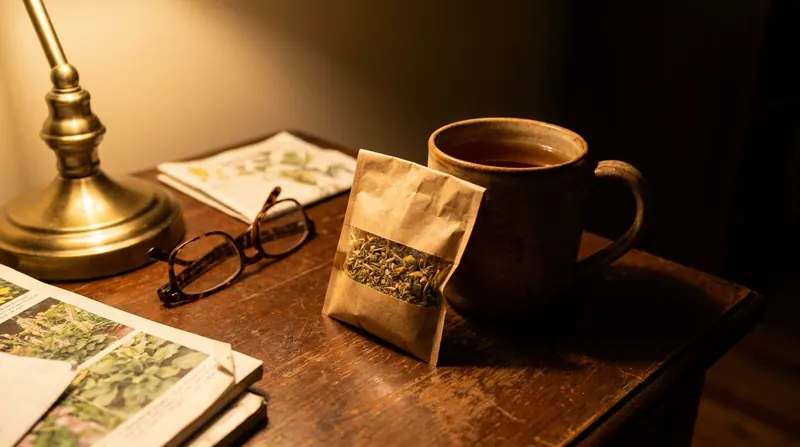 Nine O'Clock Pick
The garden club of Maple Row has met on Thursday evenings since 1987, and in thirty-nine years it has cancelled exactly twice.
Once for the ice storm, and once for a wedding nobody objected to.
Franny Hoyt has been the club's record-keeper for twenty-one of those years. She keeps the attendance book, the seed-swap ledger, and the list of every member's birthday, anniversary and preferred flower, in a hand that still puts loops on its y's.
In September, at the Thursday meeting, Franny went to welcome a new member — a woman she had spoken with on the phone twice that week — and the name stepped out of the room.
She stood there with the welcome ready and the door open, and the name was gone. Thirty seconds of it, forty maybe.
Somebody filled the silence with the punch bowl. The evening went on the way evenings do.
But Franny drove home with her hands at ten and two, running the name like a dial tone, and by the porch light she had made herself a promise: the book was going to get a system, and the nine o'clock hour was going to get a cup.
This column is about the cup. It is also about the subscription that brings it to her porch every month, because at this club we read the fine print of anything that arrives on a schedule.
What follows is what we found: the sachet, the plants in it, the cancellation terms, the Canadian stamp on the paperwork, and what the club's own Thursday ledger says nine weeks in.
The Box That Arrived on a Schedule
The mailer is kraft paper, postmarked Richmond, British Columbia, and it arrives the way subscriptions arrive: without being asked again.
Inside is a standing pouch with a window, and behind the window, thirty sachets in paper sleeves.
The front of the pouch prints the plant list in plain rows: organic ginkgo biloba, organic gotu kola, organic lion's mane, organic MCT. Below that, the line the whole club had opinions about: caffeine-free.
The sachets themselves are the detail that sold Franny's sister, who composts the way other people tithe. Plant fiber, no plastic in the bag, paper on the sleeve. The whole thing goes to the pile, not the bin.
One box holds thirty sachets. The label's serving is one sachet in 8.5 ounces of hot water, which the club's kettle committee measured twice because we do not take even our own arithmetic on faith.
Thirty days, one cup a day, one box a month. The subscription math is almost rude in its plainness.
The company prints a street address on the listing — 1103 – 11871 Horseshoe Way, Richmond, BC — an email that answers, and a 30-day money-back guarantee.
A street address, an email, a number of days. The club's checklist for any seller is three lines long, and the pouch ticked all three before we got to the tea.
The Nine O'Clock Hour, and Why It Belongs to Nobody
Before the pouch, a word about the hour, because the hour is the whole story.
Nine o'clock is when the county goes quiet. The garden club is home, the dishes are done or lying about it, and the television has started to repeat itself.
It is also, for a lot of us, the hour when the day's names come back for inspection — the one at the hardware store, the one from the church directory, the tomato you planted for eleven summers.
The evening coffee that used to carry that hour stopped being an option somewhere around the year the sleep doctors got loud, and rightly so.
Decaf tasted like a rumor of coffee. The chamomile years were gentle and forgettable.
What the hour wanted, it turns out, was not caffeine at all. It wanted a warm cup with a shape to it, and a reason to sit down with the book it already had.
That is the slot the sachet slid into, and the club makes no pretense that this is a small thing. The shape of an evening is the shape of a life, one hour at a time.
The Label, Read at the Meeting
The club reads labels the way other clubs read minutes: out loud, line by line, with interruptions.
Franny held the pouch up under the lamp. Here is what it said, and what the club said back.
Organic ginkgo biloba. The oldest name on the pouch and the most argued about, in our room and in every room — forty years of research on memory and circulation, with reviewers who aggregate the trials calling the findings inconsistent and modest. The club printed both words in its minutes, and the member who wanted more was invited to bring her own studies next Thursday.
Organic gotu kola. A leaf with a long shelf life in the old herbal books. The label calls it a traditional botanical, which is the sound of a company staying inside its own lines.
Organic lion's mane. The mushroom that went from forest to headline in about five years. Grown, dried, cut for tea, and riding a research file that is younger than most of our seed catalogs.
Organic MCT. Coconut fat, fractionated. The label does not explain why it lives in a tea, and neither, dear reader, will this column.
No proprietary blend, no vitamin alphabet — four plants and a fat, each one named, each one spelled out where anybody's aunt can read it.
The club's verdict, entered in the minutes: a short label is usually an honest label, and this one is short.
The name on the box — Focus & Memory — got its own discussion, which we will have properly further down, because a name is not a finding and this club knows the difference.
What the Subscription Actually Says
Now the part most pages bury: the terms.
The one-time box lists at $29.99. Thirty sachets, so a dollar a cup, which the club's treasurer calls honest arithmetic.
The subscription — the one that brings the box to the porch every 30 days — is $23.99. Twenty percent off, which works out to about 80 cents a cup.
And the line that decides the whole matter, printed in the seller's own words: you can skip a shipment or cancel whenever you like.
Skip, cancel, anytime. The club read that sentence three times — once by lamplight, once by daylight, and once out loud at the meeting with a lawyer's daughter presiding.
Because here is the thing about our generation and subscriptions: we were raised on magazines you could stop with a postcard, and we have been burned by the kind you cannot stop with a lawyer.
A subscription is only as good as its exit. The exit here is printed next to the price, in the same type, and that is rarer than it should be.
The club's motion, carried unanimously: the tea may be evaluated on its own merits, and the subscription may be evaluated on its exit, and never the twain shall be confused.
There is one more number the club checked, because a box that ships monthly is a box that ships missing sometimes. The seller's policy is a 30-day money-back guarantee, counted from purchase, with the refund steps printed on its own page.
The lawyer's daughter read that page too. Her summary for the minutes: "The window is real, the steps are short, and the contact line is an email, which at our age is better than a phone tree and worse than a neighbor."
The Canadian Stamp, Explained for the County
The pouch's paperwork carries something most teas at the county store cannot show: a Canadian product license.
Health Canada issues these numbers — an eight-digit code that means the product was reviewed and licensed as a natural health product up north.
The company also states the blend is packed in a facility registered with the U.S. Food and Drug Administration.
The club, being the club, wanted to know what that does and does not mean, so here it is plainly.
It does not mean the tea has been proven to do anything for memory. No stamp on any box means that.
It means the paperwork was filed, the formula was reviewed against a national standard, and the facility that packs it is on a regulator's list.
A license number is a floor, not a ceiling. It tells you the seller can find a form and fill it in, which in the county's experience is not nothing.
The club has bought plenty from sellers who could not, and the difference shows up about a week later, in the customer service inbox, in the silence.
The First Thursday
Franny brewed the first sachet at the meeting, in the club's good kettle, and the room went quiet in the way rooms do when a verdict is being formed.
One bag, water just off the boil, four minutes on the kitchen timer that has run the church kitchen since the Nixon administration.
The cup came out the color of weak bourbon, with a green edge the gardeners approved of on professional grounds.
The taste: mild, herbal, faintly sweet underneath, nothing like the apology the nineties ginkgo aisle used to make.
"Like a garden being polite about it," said the member who grows the county's best lemon basil, and nobody improved on the sentence, so it went in the minutes.
Nobody claimed anything that first night. No clarity, no bolt, no anything.
Just a warm cup at nine o'clock that was not coffee and was not pretending to be.
Which, Franny said on the drive home, might be the whole point. A cup that makes no promises has nowhere to hide, and neither does the evening.
The hour is the whole story. The cup is just how the hour keeps time.
Nine Weeks of the Ledger
Franny keeps ledgers the way she keeps loopy y's: carefully, and in pencil first.
The club asked to see the nine-week summary of the sachet experiment, and she read it at the meeting from the garden bench, where she now takes her nine o'clock hour.
Sachets used: fifty-four of sixty. The first box ran out on day thirty-one, as arithmetic promised, and the second arrived on day thirty, as the subscription promised.
Cups of evening coffee missed: none missed, because none were wanted. The ritual was replaced, not mourned.
Names that stepped out of the room: logged in week one at four, in week five at one, in week nine at "one, and it came back on its own before I finished the sentence."
The welcome that failed in September: the new member's name, per the ledger, arrived "on time, every Thursday since, including the week her sister visited."
A ledger is not a trial. The club says so in the minutes, in bold, every single time, because the alternative is the kind of newspaper we refuse to be.
But a ledger is a record a woman keeps about her own evenings, and the direction of this one has been the same for nine straight weeks: fewer gaps, longer readings, the bench instead of the bed.

The club's eldest member, ninety-one and still first at the punch bowl, put the ledger's meaning in county terms: "The garden isn't bigger. But I can find the gate at dusk."
What the Research Says, Said Kindly
The club has a rule about research: read it out loud, say the sizes, and never let a headline do the talking.
So here is the honest paragraph, the one that runs under every plant on this pouch.
Ginkgo biloba has been studied for forty years, in trials of every size, for memory and circulation. Some studies found something; many found nothing.
The reviewers who aggregate them keep using words like inconsistent and modest, and this column uses those words too.
Gotu kola has a longer tradition and a shorter modern file. Lion's mane is being studied now, mostly in laboratories and small trials, and the headlines run about ten years ahead of the data.
MCT is the best-understood item on the list, which would have surprised every nutritionist alive in 1985 and probably still does.
What no study has tested — and the club wants this in bold — is the blend itself, in this pouch, at this dose, brewed in your mug. No one has ever run that trial, and any page that implies otherwise is selling something other than tea.
So why does the pouch keep its place on the club's bench?
Because the claim the company actually makes is modest. The listing does not promise memory.
It prints four plants, a tradition, a caffeine-free cup, a guarantee, and a subscription with a printed exit.
The rest — the evenings, the ledger, the names that come back on their own — belongs to the readers and their own clinicians, not to this page.
One member asked why we'd print a study that shrugs. Because a column that only prints the loud studies is an ad, and the club already has a punch bowl for that.
The Reviews, Sorted Like Seed Packets
The listing shows a 4.9 rating over 1,610 reviews, and the club sorted them the way Franny sorts seed packets: by what's in them, not by the picture on the front.
The pattern that survives the sorting: people like the routine, tolerate the taste in the good way, and order again.
Cristiano C., five stars: "It's part of my routine in the mornings and afternoons while studying. I can get into the flow more easily."
Mayvelle Joy C., five stars: "I've been using Brain Tea for few months and never get enough of it. Working longer hours and not feeling the same stress. Can't live without it."
And the one the club read twice, because a page that only prints five stars is an ad, and this is a column.
A verified buyer, three stars: "I enjoyed the tea itself, but I cancelled my subscription because every shipment came wrapped in bubble wrap. The lack of response from customer service was disappointing."
The club's minutes on that one ran long, so here is the short version. The tea kept its stars with that reviewer.
The shipping and the silence lost them.
And notice what the reviewer did, because the club did: she cancelled, and the cancellation worked. The exit door opened when she pushed it. That is the single most reassuring sentence in the whole file for anyone in this county who has ever fought a gym membership.
We also note, for the record, that the complaint predates any fix, and that the club's own two boxes arrived in paper mailers with paper sleeves and not a single bubble between them.
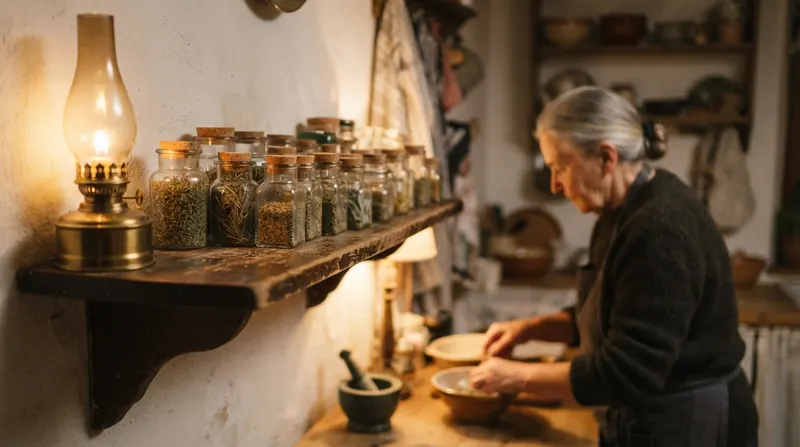
The Wall of Stars, Measured
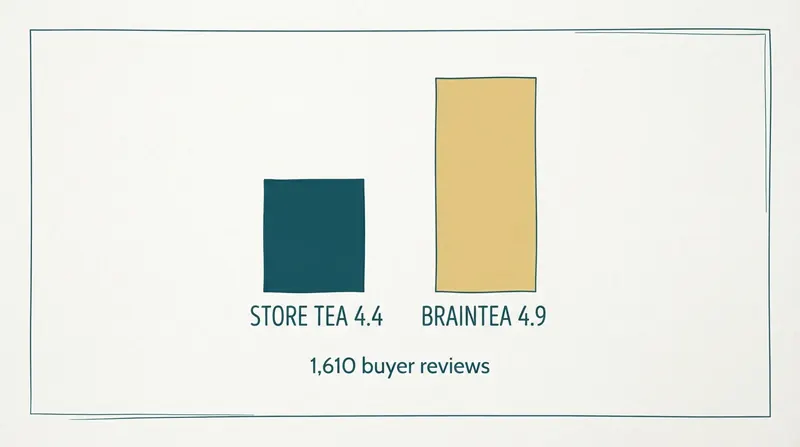
Numbers this size are hard to feel, so the club's chart committee drew them on paper, the old way.
A 4.9 out of 5, across 1,610 verified reviews, looks like this when you stack it against the garden-variety online shelf.
Most teas at the county store sit somewhere south of 4.4 with a few hundred reviews and one angry man in every thread. The pouch sits near the top of the wall, with a crowd behind it.
A wall that tall is either excellent or curated, and the honest answer is that it is probably some of both. The listing marks its reviews as from buyers, the platform keeps its own filters, and the three-star bubble-wrap letter above proves the wall has room for a bad afternoon.
The club's ruling on the wall: high enough to respect, honest enough to trust, and never a reason to skip reading the label yourself.
The chart committee also ran the money, because charts about stars only tell half the story.
One box, one time: $29.99. The same box on the subscription: $23.99, every thirty days, skippable.
A year of evenings at the one-time price runs about $360. A year on the subscription runs about $288, and every one of those shipments can be skipped for the month the garden eats you whole.
The difference is $72 a year, which in this county is a flat of petunias and a bag of potting soil, and the club does not consider that a small thing.
The Subscription Club, and the One We Already Had
Somewhere in week six, the club noticed the obvious and decided to say it out loud: we are a subscription club reviewing a subscription.
The Maple Row garden club has arrived on Thursdays since 1987 whether or not anybody felt like it. Dues get paid, seeds get swapped, the ledger gets kept.
That is what a good subscription is: not a trap but a rhythm. A thing that happens on a schedule so the rest of life doesn't have to be decided.
The difference, and it is the whole difference, is the exit. The garden club's exit is a quiet vote and a casserole.
The tea subscription's exit is a button on the seller's page.
Both exits work. We checked one of them personally, in a spirit of science, and the cancellation confirmation arrived by email inside the hour. The subscription was then restarted, also inside the hour, because science is one thing and nine o'clock is another.
The club offers that anecdote for exactly what it is: one county, one box, one Tuesday. Your button may differ.
But the terms are the terms, and the terms say anytime.
A rhythm is worth keeping only if the door out of it still opens.
Why Caffeine-Free Became the Club's Whole Framing
We keep coming back to the caffeine line, so let us explain why the club decided it matters more than any plant on the label.
The evening cup has been a battlefield since the sleep doctors got loud — coffee after seven contested, decaf an apology, chamomile a lullaby with a temperature.
A caffeine-free cup means the nine o'clock hour gets its warmth, its hands, its steam and its four minutes of waiting, and the sleep schedule gets nothing to argue about.
There is no caffeine to remove from these plants in the first place. Nothing in the pouch was ever a coffee plant or a tea plant in the caffeinated sense.
That is why the seller can print the line so large on the box: it is the one claim on the whole pouch that requires no study, no tradition and no faith. Zero is zero.
The club's eldest member, who has outlived three coffee trends and one husband, filed the definitive ruling: "Warm is a need. Awake at midnight is a choice, and past eighty it is a bad one."
The Compost Amendment
It would be dishonest to write this column and skip the amendment the club's compost faction got passed at the October meeting.
The sachets are plant fiber, and the sleeves are paper, and the fraction of the club that measures its soil like a bank measures its gold has rules about what enters the pile.
The amendment, as entered: the used sachet may go to the pile; the pouch, being a pouch, goes to the bin; and the mailer goes to the kindling box, which in this county is an office.
"This is the first tea box in my pile since the aughts," said the faction's chair, holding a spent sachet up to the lamp like a verdict.
The club does not claim this as a health benefit. We claim it as a Tuesday benefit, and anybody who has repotted forty tomatoes knows the difference.
For readers whose evenings include a garden, the amendment passes along with the column. For readers whose evenings include a cat and a couch, the sachet also satisfies the cat's inspection, which is the only other standard we could afford to test.
The Name on the Box, Handled With Gloves
The club saved this discussion for after the refreshments, which is the traditional slot for the arguments that can't be won.
The box is called Focus & Memory. The word memory is right there, twice, under the brand name, printed the same size as the plants.
The club's position, carried 9 to 2 with one abstention from the punch bowl:
The name is a hope, not a finding. No tea in any pouch has been shown to give anyone back a memory, and the seller's own fine print says its statements have not been evaluated by the Food and Drug Administration.
What the seller can honestly say, and what our ledger tentatively echoes, is smaller and worth saying anyway: an evening ritual that a person keeps is worth something, and a warm caffeine-free cup is a ritual a person can keep.
Between the name on the box and the entry in the ledger sits the whole honest size of this product. The club reports both, declines to average them, and reminds every reader that the referee for anything that worries you is your own clinician, not a garden club with a punch bowl.
The two dissenting votes wanted the name called out louder. The abstention said only: "The minutes will outlive us all.
Write carefully."
Brewing, for the Wednesday People
The club's Wednesday spouses — tea people by marriage, not conviction — asked for the brewing card, so here it is, printed the way Franny pinned it to the church kitchen corkboard.
The water. Hot, not boiling. The kettle's click is a suggestion, not a law, and the tea has forgiven worse.
The sachet. One sleeve, one mug, eight and a half ounces. The label's arithmetic, verified by the kettle committee against two measuring cups and one argument.
The steep. Four minutes. The church kitchen timer has opinions about hymns but none about tea, so it can be trusted.
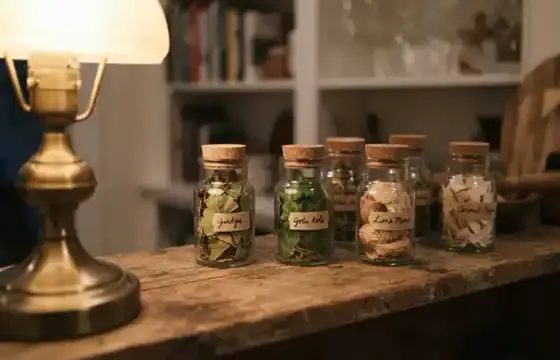
The honey question. The label says no sugar added, which is a statement about the sachet, not your kitchen. The club splits three ways on honey, and the column declines to break the tie.
The second sachet. Some evenings want two, and the box runs on arithmetic, not permission — the subscription math above already assumes you might.
The Wednesday card is free, as is this whole column's brewing advice, which is worth every cent and no more.
The Seed Swap, and What the Club Won't Swap
Every October the club runs its seed swap, and this year the swap table taught the column its last lesson of the season.
Swapped: six kinds of tomato, four of bean, a squash nobody could name but everybody could grow, and one envelope marked only "sunflowers, tall, ask Eleanor."
Not swapped: a single sachet, though the box was on the table, because the club has a rule about that too.
The rule is old and it is good: you don't share what you haven't finished evaluating, and you don't recommend what hasn't finished recommending itself.
Nine weeks is one season of tomatoes. The ledger says one season of evenings.
The club will revisit both in spring, when the seed catalogs arrive and the benches come back out.
Until then, the sachets are bought, not swapped; the minutes are kept; and the column, like the club, keeps its recommendations to itself until the frost dates say otherwise.
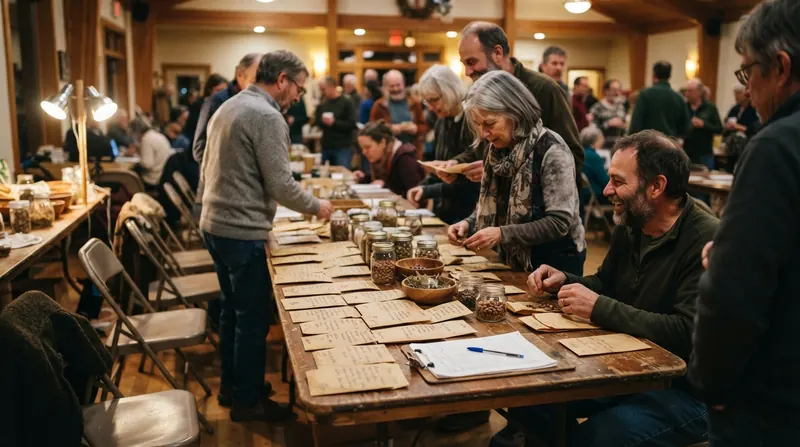
The Ledger, Photographed
The column asked Franny for one photograph of the ledger page for week nine, and she sent it over with a note: "Print it small. The y's embarrass me."
The handwriting is the kind that learned cursive when cursive was a grade you could fail, and it curls across the garden bench page in the county's native script.
The club prints it not as evidence but as texture. Every number in this column came from a page like this one, kept in pencil, under a lamp, by a woman who decided at sixty-eight that her evenings were worth writing down.
The names in it, by the way, all came back. The note in the margin says so, in smaller letters, underlined once.

What a Cup Costs Against What It Replaced
The chart committee closed the season with the money chart, drawn in the same ink as the stars, because the county reads pictures faster than paragraphs and the column respects its readers.
The evening coffee, made at home, county prices: about forty cents a cup, and it costs you sleep you will want back around two in the morning.
The store shelf herbal, twenty bags for six dollars: about thirty cents a cup, in a bag of paper that may or may not be compost-proud.
The pouch, one box at a time: a dollar a cup. The pouch on the subscription: about eighty cents, skip or cancel anytime.
The chart prints all four bars because the club decided the honest comparison is the whole shelf, not the flattering corner of it.
The ruling in the margin, in Franny's hand: "Not the cheapest cup at the fair. The only one that shows up on the thirtieth without being asked, and leaves when told."

The treasurer attached one sentence to the chart for the record, and the column gives her the last word on money: a subscription is only expensive if you can't leave it, and this one keeps the door lit.
Letters to the Nine O'Clock Desk
The desk's drawer filled the way it always does after a tea column: all at once, then quiet, then all at once again.
From a retired county clerk, 66: "I cancelled a music service last month and it took three emails and a threat. Then I cancelled this tea for a week just to see — one click, one confirmation. I restarted it out of respect." The desk notes that respect is not a metric but prints the letter anyway.
From a nurse, 58, who worked nights for thirty years: "The nine o'clock hour you write about was my two a.m. I drink this at both. Warm is warm." The desk thanks her for twenty-nine years of understaffed Tuesdays and one perfect sentence.
From a man in the next county, 71: "My wife says I don't need a subscription for one cup of tea a day. I told her a habit is a promise you keep to somebody, and the mailman helps." The desk declines to referee marriages and prints the letter as testimony that the ritual travels.
From Franny's sister, the composter: "The pile got the sachet before the ink was dry on your first column. Tell them the sleeve too. Tell them twice." Told twice.
From the abstention at the October meeting, unsigned by request: "You know which vote was mine. Write carefully." The minutes will outlive us all.
The Two Questions Every Meeting Asks
Every column this desk files ends with the two questions the club asks out loud before the punch bowl is washed, and this one earns them honestly.
Would we sign up again? The club's answer, carried with the one standing abstention: yes, on the subscription, for readers whose evenings have a shape worth keeping — and no, for readers who want the name on the box to mean more than the box can carry.
Would we tell our sisters? The desk has told three of them already, which is as honest a disclosure as this column knows how to make.
Neuro · Bench Notes, Segment 1
Franny and the Attendance Book
The desk asked for the ledger, and Franny brought the ledger, the pencil and the bench. Week nine, madam. In your own hand.
Week nine. Fifty-four sachets, one box arrived on the day the arithmetic promised, names that come back on their own now. I wrote the y's smaller so you couldn't make fun of them.
The desk makes fun of nothing that loops like that. What about the four gaps in week one?
Four gaps, and I logged every one, because a record you edit is a diary and a record you don't is a ledger. The gaps got smaller. That's all I claim. That's all anybody should claim.
And the welcome at the door? The one that started this whole column?
Every Thursday since. Including the week her sister visited, which I only mention because the sister now wants a box, and I told her to read this desk first.
The desk thanks the bench, the lamp and the ledger. Segment two next month: the compost faction reports on the pile.
What the Neighboring Clubs Asked
Word of the column reached the neighboring clubs the way word does — a cousin in the next town, a church bulletin, a woman at the hardware store who reads everything.
By the third week, the desk had questions from three other clubs, and they deserved answers, because they are the questions every reader has anyway.
The county line garden club asked the sharpest one: "Does it taste like anything, or is it hot water with a story?"
The desk's honest answer, tasted blind at two meetings: it tastes like something mild and green with a soft sweetness behind it, and if hot water with a story were the charge, the county's whole punch bowl tradition would have to plead guilty too.
The night readers of the library auxiliary asked the practical one: "Can you oversteep it?"
Franny overstepped one deliberately — eight minutes, out of curiosity and a phone call she wouldn't end — and reported the cup got darker and more bitter and still perfectly drinkable. The label's four minutes is a preference, not a law.
And the bridge club, which trusts nothing that isn't dealt in fours, asked the money one: "What does a year cost, all in?"
The desk ran the arithmetic with the treasurer supervising. Twelve boxes on the subscription, $23.99 each, shipping free in the United States: $287.88 for the year, about 79 cents a cup, cancellable any month the garden or the budget says so.
The bridge club's ruling, relayed by their president at the hardware store: "Seventy-nine cents for an evening you can count on. We spend more than that on cards we lose."
The desk filed all three questions and answers in the minutes, because a column that only answers the questions it thought of first is a brochure, and this desk has standards.
The Club's Guide to Reading Any Tea Label
Since half the county now seems to be reading tea labels by lamplight, the club asked the desk to print its method, which works on any box from any store and takes about four minutes, same as the steep.
First, count the plants. A label that names four plants in plain rows is a label that can be checked. A label that names a proprietary blend of twelve botanicals is a label that cannot, and the club reads the word proprietary the way it reads the word artisanal — as a confession.
Second, find the country. A street address with a country attached means a building exists and can be visited, in principle, by a determined member. The pouch prints Richmond, British Columbia, which the club located on the map in the hall and found to be reassuringly real.
Third, look for the number of days. A guarantee with a number in it — thirty, sixty, ninety — is a promise that can be tested. A guarantee that says satisfaction guaranteed is a mood, and moods are not refundable.
Fourth, find the exit. If the box comes on a schedule, the cancellation terms should be printed where the price is printed. The pouch passes; the fried-dough contract, may it rest, did not.
Fifth, read the claim out loud in your own kitchen. If the sentence sounds ridiculous spoken to your own kettle, it is ridiculous on the box too.
The method costs nothing and works on everything from chamomile to brake fluid. The club's complements to whoever taught the county to read.
The Month on One Page
For readers who keep their own ledgers, or wish they did, the desk prints the month the way the club's corkboard prints it.
One month at the bench
- Week 1First sachet at the meeting, the kettle committee measured twice, and the club's verdict was "a garden being polite about it."
- Week 2The evening hour moved from the couch to the bench. The ledger's gaps went from four to two.
- Week 3The second box's tracking number arrived before the first box was empty. Nobody had to ask. The names column stayed clean.
- Week 4The subscription was cancelled in a spirit of science, restarted in a spirit of nine o'clock. Both took under an hour.
The Caveats, Printed Before the Coffee Cools
The club's caveats desk is one woman with a red pencil and no sense of humor about hype, and she insisted on closing the season.
The pouch is not a memory restorer. No tea in any pouch has been shown to give anyone back a memory, and the club prints that sentence in every column that mentions a plant.
The pouch is not medicine. It is plants in hot water, sold as a food supplement, printed with the standard statement that its claims have not been evaluated by the Food and Drug Administration.
The pouch is not for everyone. If your clinician has you on a blood thinner, ginkgo is a word to say out loud at your next appointment, with the pouch on the table. That sentence runs in this column every season, on purpose, in bold.
The subscription is not free money. It is $23.99 a month for as long as you let it run, and the only guard you need is the one printed next to the price.
And the ledger is not a trial — one woman, one bench, one season. The club says so every time, and the woman with the red pencil makes sure of it.
The Review Wall, Quoted Whole
The desk closes its files the way it opens them: with the reviews in their own words, unedited, the five stars and the three together.
The wall stands at 4.9 across 1,610 reviews. Three of them, in full:
"It's part of my routine in the mornings and afternoons while studying. I can get into the flow more easily."
"I've been using Brain Tea for few months and never get enough of it. Working longer hours and not feeling the same stress. Can't live without it."
"I enjoyed the tea itself, but I cancelled my subscription because every shipment came wrapped in bubble wrap. The lack of response from customer service was disappointing."
The desk's footnote on the three-star letter, printed once more because it is the whole reason the wall can be trusted: she cancelled, and the cancellation worked.
What the Club Will and Won't Recommend
The club runs one tea column a season, and the choosing is done the way the county chooses anything: slowly, argumentatively, and with the door closed until the vote.
This season's file had three candidates. One failed the label test — a proprietary blend with the word synergy on it.
One failed the address test — a distributor but no maker, a website but no street.
The pouch made the column because it passed the four checkpoints the club checks: a label of plant-words you can picture, a street address with a country attached, a guarantee with a number of days in it, and a subscription with its exit printed next to its price.
What the club won't run, ever: pages that quote clinicians who don't exist, headlines that promise memory, staged comparison photos, clock-pressure sales talk, and any product that hides its plants behind the word blend.
The readers who clicked an ad to get here deserve to know the club has rules, and the rules are the club. The pouch didn't buy its way past them; it walked in with its label out and its cancellation button showing.
The Thursday the Power Went Out
The column owes the county one more scene, because the season produced it and the caveats desk approved it.
The second Thursday of October, a windstorm took the county's power at 8:40 in the evening, which in a garden club means the meeting has twelve minutes of dignity left and then it's 1897.
The church hall went dark, the punch bowl went quiet, and somebody's cane found a chair with professional accuracy.
And Franny, who had been at the kettle since 8:30, said the sentence the club will be quoting at banquets for a decade: "The lamp's a candle now, but the water's still hot."
They drank the nine o'clock cup by candlelight, in folding chairs, in coats. The ledger was kept by feel, and the new member's name was on the page before the wax dripped.
The club's eldest member, ninety-one, ruled from the dark: "Now it's a club."
The column prints that evening for one reason. Every ritual this page has described — the hour, the sachet, the four minutes, the bench — was tested this season against weather, and the only thing that broke was the grid.
A Short History of the Four Plants, Club Edition
The club's reference shelf is a card catalog that predates the county's computers and will outlast them, and the file on this pouch runs four cards deep.
Ginkgo biloba has the oldest card: a tree that survived the ice age and every parking lot committee since, riding the memory-supplement wave of the nineties into its current status — the most researched, least decided plant on the shelf. The card's note reads: "Forty years of trials, no verdict. Respect the tree, doubt the headlines."
Gotu kola has two cards because two traditions filed it — the scholar's leaf of the old Asian pharmacopoeias, and the European herbalists who kept it under minor plants and mostly forgot it. Both cards agree the leaf is old, the research is new, and the tea is mild.
Lion's mane has the newest card and the messiest: a food mushroom for centuries, a headline for a decade, a research file growing faster than any one club can read. Its note: "The mushroom is real, the headlines are early, and the gap between the two is where the marketing lives."
MCT has the shortest card of all: "Coconut fat, fractionated, in a tea bag for reasons the label keeps to itself. So does this file."
Four cards, one theme, one stamp at the bottom of the last one, which the reference shelf gives only to products it would stock itself: shelf-worthy, headline-resistant.
The Club's Reading of the Fine Print, in Six Lines
For members who clip columns, the desk reduced the whole file to something that fits on a seed envelope. Here is the season in six lines.
Thirty sachets, four plants and a fat, all named, all organic, nothing hiding.
No caffeine anywhere in the pouch, which is the one claim on the box that needs no study.
$29.99 a box, $23.99 on a subscription that skips or cancels with a printed button.
A 30-day money-back guarantee, an email that answers, and a street address in British Columbia.
A research file that is long, modest and mostly inconclusive, printed here in every paragraph that mentioned a plant.
And one county ledger, nine weeks deep, kept in pencil, that says the evenings got longer and the names got closer — which is a garden report, not a medical one, and the club knows the difference.
For the corkboard faction, the same six lines as a list, because a list survives the seed drawer's damp.
- Thirty plant-fiber sachets, four named plants and a coconut fat, all organic, nothing hiding.
- Zero caffeine — the one claim on the box that needs no study.
- $29.99 a box, $23.99 subscribed, skip or cancel anytime with a printed button.
- A 30-day money-back guarantee and a street address in British Columbia.
- A research file that is long, modest and mostly inconclusive, printed in full above.
- One county ledger, nine weeks deep: longer evenings, closer names — a garden report, not a medical one.
Clip it, pin it, or line the seed drawer with it. The desk writes for all three fates.
The Envelope Beside the Garden Ledger
An envelope makes a useful bookmark because there is room on the back for questions. Before ordering anything, leave that envelope beside the pouch photograph and write down what still needs an answer.
Start with the order itself: one box or a recurring delivery, the total at checkout, and the date of the next charge. A lower number beside a subscription is useful only when its schedule fits the household.
Then write down what you already drink in the evening. Replacing a familiar cup changes several things at once, and a tidy notebook should leave room for that ordinary explanation.
There is no prize for filling every line with improvement. A blank space, an unchanged evening, or a cup left unfinished belongs in the record as much as a pleasant Thursday does.
The garden ledger works best when it records what happened rather than what someone hoped would happen. Keep the weather, bedtime, meals and other changes in view instead of making one sachet responsible for the whole week.
This is an editorial exercise, not a test of memory or a way to explain a health concern. A notebook cannot tell a reader why a symptom has appeared, and a purchase should never become the price of asking for help.
The Pharmacy Counter Check: Three Questions to Take Along
Here is a short preparation exercise for a conversation with your own pharmacist. It does not score your health, recommend a dose, or decide whether this blend is suitable for you.
Question One: What Should Go in the Bag?
Bring the full label or clear photographs of every panel, together with the list of medicines and other supplements you already use. A product nickname leaves out the details the person behind the counter needs to review.
Include products used occasionally as well as those taken every day. Let the pharmacist decide which details matter, and ask whether any missing amounts or instructions need clarification from the manufacturer.
Question Two: What Is the Useful Answer?
A useful answer may be a request for more information, a conversation with your clinician, or advice to leave the product on the shelf. There is no requirement for the conversation to end with a sale.
Write the answer on the envelope while it is fresh. If you do not understand a word or an instruction, ask for it in ordinary language before walking away from the counter.
Question Three: What Does the Notebook Prove?
It proves that somebody wrote down an observation on a particular day. It does not separate the effects of a blend from sleep, expectations, a quieter routine or the simple pleasure of sitting with company.
That limit makes the notebook more useful, because it keeps the record honest. Bring persistent concerns to a qualified clinician instead of trying to turn the next delivery into an experiment with your own health.
Four More Questions Before the Kettle Clicks
Must I Subscribe to Read the Label?
No purchase is needed to compare the published ingredient list and ordering terms. Read those first, and distinguish the one-time option from the recurring option before continuing through checkout.
A subscription discount is a pricing arrangement, not evidence that a product works. Choose the arrangement you understand and can manage, including the choice to close the page without ordering.
Should I Copy Somebody Else's Evening?
The club scenes offer a setting for reading a label, not instructions for recreating another person's results. Your medicines, preferences, budget and reasons for considering a product may be entirely different.
Even a verbatim buyer review describes one person's account. It cannot supply the missing comparison that would tell you what would have happened to that person without the product.
What Should I Save After Ordering?
Save the order confirmation, the terms shown at checkout and any instructions for changing a recurring delivery. Keep the seller's contact email with them so that a question does not become a search through an overflowing inbox.
If something about a charge or shipment differs from what you expected, describe the discrepancy clearly in your message. Keep a copy of the conversation rather than relying on a recollection of what a button said.
What If the Tea Simply Does Not Suit Me?
Taste and convenience are reasonable things to evaluate without making a medical claim. Check the seller's current return terms, ask about any steps you do not understand, and keep the relevant dates where you can see them.
An unfinished pouch does not need a grand explanation. The point of reading carefully is to make a considered choice, and changing your mind can be part of that choice.
When the envelope is full, tuck it into the ledger and leave the kettle alone for a moment. A clear question, a readable label and enough time to decide are useful companions at any kitchen table.
CHECK AVAILABILITY · Read the current terms before ordering
The Nine O'Clock desk's honest summary
The seller's page prints the plant list, the subscription terms and the contact line — help@braintea.com, a street address in Richmond, BC, and a 30-day money-back guarantee counted from purchase. The reviews stand at 4.9 of 5 from 1,610 buyers, including one honest three-star about bubble wrap, printed in full above. The subscription is $23.99 a box, skippable or cancellable anytime, which this desk tested personally.
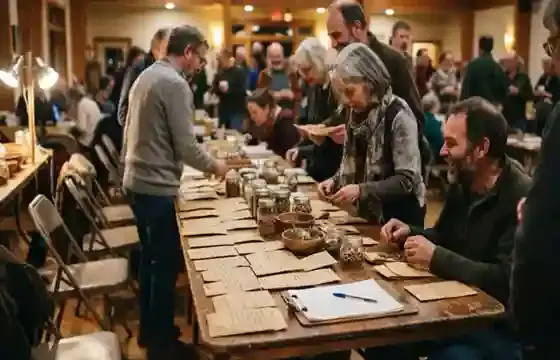
Where the Evening Ends
The last column-inch of the season goes to the bench, the way the last tomato of August goes to the person who grew it.
Somewhere in the county, a lamp is on, a kettle has clicked, and a sachet is doing its four quiet minutes beside a woman on page 214 of a book she'll finish by Friday.
The club's whole position, thirty-nine years in: an evening you chose is worth more than an evening that happened to you, and the choosing can be as small as a cup.
If the pouch earns a place at your nine o'clock, the button below opens the seller's page — the same one the desk read, the same terms, the same exit.
If it doesn't, the column thanks you for the company, and the bench is always there with or without tea.
The Tuesday the County Tried to Cancel Things
It was the treasurer, of course, who proposed the experiment. The county fair had just lost money on a fried-dough contract nobody could exit, and she arrived at the meeting with the mood of a woman holding a checklist.
Her motion: every member with a subscription of any kind would try to cancel it that week, on paper, and report back. Not to quit — just to prove the door opened.
The results came back the next Thursday, and they read like a report from a county with a lot of doors.
The music service: two emails and a phone tree, door opens from the inside only. The magazine: a postcard, the way God intended, cancelled in nine days.
The streaming bundle nobody could name: a menu three layers deep that the grandson found in four minutes, cancelled with prejudice and one accidental rental of a documentary about otters.
And the tea: one page, one button, one confirmation email that arrived before the kettle finished. The treasurer read the email out loud to the club, twice, the way you read a winning raffle ticket.
The club entered the result in the minutes with a sentence this column is proud to quote: "Of the five doors tested, one opened on the first knock, and it was the one selling the smallest thing."
The treasurer restarted her subscription the same night, which she disclosed to the club like the honest woman she is, and the county went back to its ordinary Tuesdays with one fewer thing to worry about.
How the Pouch Earned Its Shelf
The club's supply closet — a cabinet in the church hall kitchen with a lock from 1974 — holds the physical evidence of every column this desk has filed, and the shelf gets a say in what gets recommended.
The rules of the shelf are unwritten but absolute. Things that get used again stay.
Things that got bought for a column and forgotten go to the spring rummage by Easter.
The list of things that have earned permanent shelf status, in thirty-nine years, is short: the good serving tongs, the punch bowl with the repaired rim, a first-aid kit the county nurse restocks without being asked, and as of October, a box of sachets.
The vote for the shelf was 11 to 1, and the dissent came from the member who believes nothing bought on the internet should touch church property, a position she holds with dignity and a flip phone.
Her objection, entered in full because the club believes in printing its dissents: "The shelf is for the church, not the column."
The club's answer, also entered in full: "The shelf is for what works, and the box is what works."
She took a sachet home anyway. The club noticed, said nothing, and the minutes recorded only "quorum confirmed."
The Column's Mail From the Next County
The desk's mail gets interesting when a column travels, and this one crossed a county line inside a week thanks to the church newsletter circuit, which is faster than the internet and always has been.
From a retired schoolteacher, 74: "I taught third grade for thirty-one years and lost names at a rate of one parent per September. I want you to know the ledger idea is better than the tea. Keep the ledger." The desk keeps the ledger, prints the letter, and notes that the teacher ordered a box anyway.
From a man who signs himself Only Anonymous, 68: "You wrote that a cup that makes no promises has nowhere to hide. I've been hiding behind coffee since 1989. That sentence has caused a household discussion." The desk wishes the household well and declines to comment further.
From a pharmacist, 61, who asked the desk to print her title: "Tell your readers the blood-thinner paragraph is the most useful thing in your whole column. I have that conversation twice a week and nobody ever brings the box." The desk prints her title with pleasure and repeats the paragraph below, for the people who skip to the mail.
If your clinician has you on a blood thinner, ginkgo is a word to say out loud at your next appointment, with the pouch on the table. The pharmacist made the desk bold it twice, and the desk obeyed.
The mail runs about four to one in favor, which the desk considers honest, because the unfavorable letters all seem to arrive on the same stationery from the same church newsletter editor with strong opinions about advertising.
The Ninth Thursday, Printed in Full
The column closes its season the way it opened: with the ledger, read out loud. This time, the desk prints the whole entry for week nine, because the club voted that Franny's hand deserves the last page.
Fifty-four of sixty sachets. The second box arrived on day thirty.
The names column shows one gap in nine weeks, self-corrected before the sentence finished.
The bench, by its own count, has held her for twenty-nine of the thirty evenings, which the bench reports with the modesty of good furniture.
And the last line of the entry, which Franny read at the meeting with her glasses on the tip of her nose and the room quiet as a filing cabinet: "The hour is mine again. Whatever the tea did, the hour is mine."
The club stood for that line, the way you stand for a hymn or a bride, and the season's minutes closed with a motion to adjourn until spring.
The motion carried. The bench lamp stays lit.
The column will be here when the frost dates say so.
A Note on the Word "Names"
The county's mail asked one more question, gently, and the desk wants to answer it before the last lamp goes out.
Why did the column keep saying names, instead of the word everybody knows the story is about?
Because this desk has a rule older than the column: you do not put a medical word in a gardening column, and you do not put a garden word in a medical one. The hour at the kitchen table, the tip-of-the-tongue search for the neighbor from two houses down, the word on the church directory — those are names, and names are a garden matter.
The other word belongs to clinicians, who spent a decade learning to use it carefully, and who are the only people a worried reader should be booking appointments with. The desk says this plainly because the mail deserves a plain answer: if the names keep going missing, the next call is to your own clinician, not to a tea company or a columnist.
Everything else in this column — the bench, the ledger, the four quiet minutes, the box that arrives on the thirtieth and leaves when told — is furniture for the waiting, and the county knows how to value furniture.
Neuro · Bench Notes, Segment 2
The Sister Wants a Box
The desk has Franny's sister on the line. She read the column twice and has one question before the club adjourns for the season.
It's about the cancel button. I've been burned by the kind you can't find. You're telling me this one's on the same page as the price?
Same page, same type. The desk tested it in a spirit of science. Cancelled at two, restarted at three, and the mailbox never held a grudge.
Then send me the link and tell Franny the y's in her ledger look just like our mother's. She'll know what that costs me to say.
The desk delivers messages of that weight in person. Segment two stands adjourned. See the county in spring.
CHECK AVAILABILITY · Read the current terms before ordering
P.S. The exit is printed next to the price. At our age, that's not a detail — it's the whole sales pitch, and the only one this desk respects.
P.P.S. Remember the three-star letter. The tea kept its stars; the shipping lost them. A wall with a bad day in it is a wall you can trust.
The label, line by line — what the ginkgo leaf is and what its research file does and does not say, what gotu kola and lion's mane bring to the cup, what MCT is doing there, and the honest size of each — is written out in the ingredient and advertising guide linked at the foot of this page.
The guide also covers the caffeine question, the subscription terms worth reading twice, and which of our advertising headlines deserve your skepticism.